The words we use for our bodies can be deeply personal. A term that feels completely comfortable to one person may feel uncomfortable, dysphoria-inducing or triggering to somebody else.
At The Queer Parenting Partnership, we believe people should be able to tell those supporting them which words they would (and would not) like used when discussing their body.
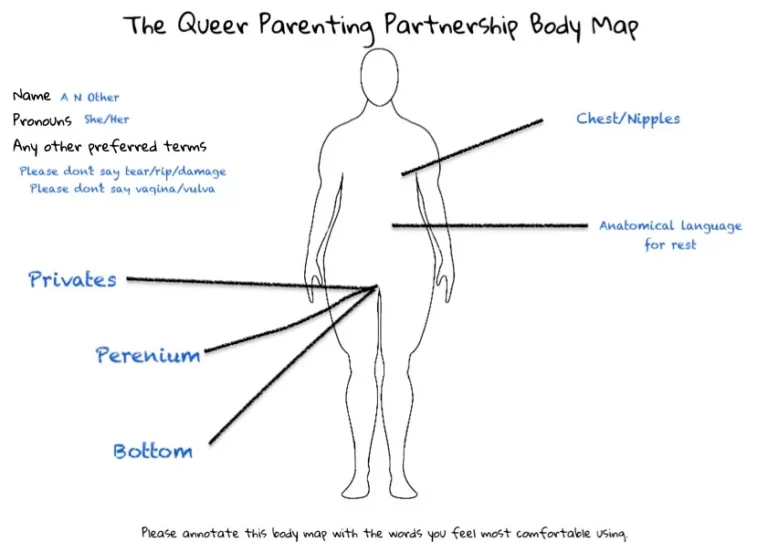
Our Body Map is a simple communication tool designed to make those preferences clear. It gives you space to record the language you feel comfortable using for different parts of your body, alongside any words or phrases you would prefer your birth worker or care provider to avoid.
For birth workers, the map can provide an accessible reference that helps you communicate with the people you support in a way that respects their individual language and boundaries.
How to Use the Body Map
There is no right or wrong way to complete your body map.
You can annotate the areas that are relevant to you with the terminology you prefer. You can also record words you don’t want people to use or add any other information that would help somebody communicate with you more comfortably.
You don’t need to explain why you prefer particular terminology. Your language preferences are enough.
You can then share your completed map with the people involved in your pregnancy and birth care if you would like them to use it.
How Do I Use This Map as a Birth Worker?
We recommend introducing the body map early in your relationship with a client, rather than waiting until pregnancy or birth care requires conversations about their body.
Print a copy and invite your client to annotate it with the terminology they feel most comfortable using. Once completed, it can be kept somewhere prominent in their file so that you can refer back to their preferences when necessary.
The body map can also create an opportunity for your client to tell you about other communication preferences or boundaries they would like you to know about. They may choose to add these to the map or discuss them as part of your usual intake process.
Importantly, the body map is an invitation to communicate, not an invitation to investigate.
If somebody tells you that they don’t want a particular word used, you don’t need to know why. Similarly, if they mention trauma, dysphoria or another difficult experience without wanting to provide further information, respect that boundary rather than asking them to explain.
Language preferences may also change. Checking in occasionally gives your client an opportunity to update anything that no longer feels right.
You can use the Body Map alongside our Birth Preferences Sheet and Birth Plan Icons to help your clients communicate their preferences for pregnancy and birth care.
Why Might Someone Want to Use a Body Map?
There are many reasons somebody might feel more comfortable using particular words for their body.
For some trans and non-binary people, conventional anatomical or gendered terminology may cause or contribute to dysphoria. Other people may have particular language preferences because of previous experiences, their culture, their relationship with their body or simply because certain words feel more comfortable to them.
A body map may be particularly useful for someone who:
- Experiences gender dysphoria
- Has experienced sexual violence, abuse or other trauma
- Has experienced medical or birth trauma
- Feels uncomfortable with particular anatomical terminology
- Has complicated feelings about their body or body image
- Uses different terminology for their anatomy
- Wants greater control over the language used during their care
Equally, someone doesn’t need to have experienced trauma or dysphoria to use a body map. Wanting particular language used for your own body is reason enough.
Supporting Respectful, Individualised Care
Using somebody’s preferred terminology may seem like a small part of providing care, but language can affect whether a person feels listened to, respected and comfortable communicating with you.
The Body Map isn’t about finding one universally “inclusive” set of words. It’s about recognising that different people need different language and giving each person an opportunity to tell you what works for them.
Download the Body Map
Our Body Map is available as a free resource from The Queer Parenting Partnership.
Download and print a copy to complete yourself or use within your birth work practice.
If you’ve found this resource useful and would like to help us continue creating accessible resources for LGBTQ+ families and the people who support them, you can also choose to make a donation to The Queer Parenting Partnership.