
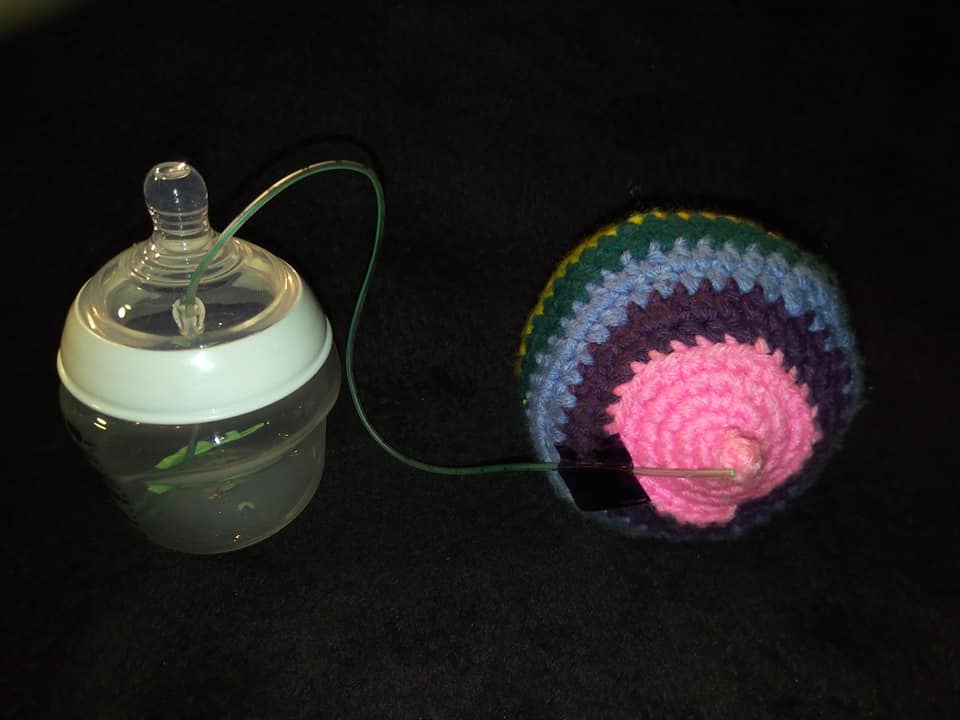
When it comes to feeding your baby, many people seem to think you only have 2 options – breast/chestfeeding or bottle feeding. Whilst your options are human milk or formula milk, there are multiple delivery systems available. One of those options is a Supplemental Nursing System.
An SNS can give families another way to approach feeding, particularly when feeding directly at the chest or breast is important to them but additional milk is also needed. It can also provide opportunities for parents who are not producing milk themselves to feed their baby at the chest or breast.
What Is a Supplemental Nursing System (SNS)?
The most basic explanation for an SNS is that it is a container with a straw.
More specifically, an SNS uses a thin feeding tube to deliver human milk or formula while a baby feeds at the chest or breast. The tube sits alongside the nipple so that the baby can take milk through the tube while sucking.
There are commercially available SNS devices designed specifically for this purpose, but it is also possible to create your own system using relatively simple equipment.

Why Use an SNS?
There are many reasons for using an SNS – low milk supply, non-gestational/non-lactating parent feeding, delay in milk coming in, etc.
For some families, an SNS can be useful when a baby needs additional milk, but the parent would still like them to feed at the chest or breast. Instead of providing that additional milk separately, the SNS allows the baby to receive it while feeding.
An SNS can also offer another feeding option for non-gestational parents. For example, a parent who is not lactating may choose to use an SNS so that they can feed their baby at the chest or breast using expressed human milk or formula.
As with any way of feeding your baby, there is no requirement to use an SNS simply because it is available to you. Some families find that it works brilliantly for them, while others prefer different feeding methods.
How to Use an SNS
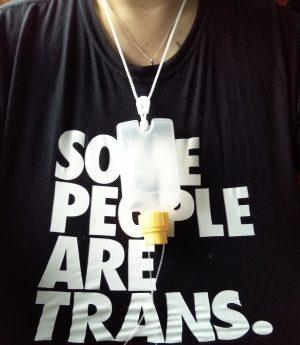
The ‘container’ is filled with human milk or formula, the ‘straw’ is then attached to the ‘container’ on one end and taped alongside the feeding person’s nipple with low-adhesive tape. Then, depending on the system you are using, you can hold the container in your hand, place it inside a bra or tight-fitting top, pin it to your clothing or even wear it around your neck.
Getting the positioning right may take a little experimentation. The aim is for the end of the tube to sit in a position where your baby can take milk from it while feeding. Different systems may work slightly differently, so how you position the container and tube will depend on the setup you are using.
Where Can I Get an SNS?
You can quite easily purchase one online. They cost around £40, so they’re not exactly cheap. Alternatively, you can make your own.
Buying a purpose-made SNS can be the simplest option because you have everything you need in one system. However, the cost may make this inaccessible or simply not worthwhile for some families, particularly if you are unsure how long you will use it.
Making your own can provide a cheaper alternative and gives you some flexibility over the type and size of container you use.
How to Make an SNS
There are a number of ways you can make an SNS. The thing you’re most likely to need to purchase is a feeding tube.
You will also need something to hold the milk and something suitable for securing the tube in place. Exactly what works best may depend on what you already have at home, how much milk you need to provide and whether you want to hold or wear the container while feeding.
Container Options
You will only need one container (BPA FREE):
- Bottle (vented bottles tend to work best);
- Sippy cup with soft teat;
- Milk storage bag;
- Syringe (smaller syringes are better for premature babies).
If you are using a bottle or sippy cup, you’re better off with a smaller one, around 150ml, as it won’t take up too much of the feeding tube length.
The different containers have slightly different advantages. A bottle provides a solid container and is relatively easy to handle, while a milk storage bag takes up less space. A syringe can work particularly well when you only need a small amount of milk.
Feeding Tube Options
You want this to be about a metre in length:
- 4FR Polyurethane feeding tube;
- 5FR Polyurethane feeding tube.
You might be able to get some feeding tubes and syringes from your local hospital if you ask nicely. Otherwise, you can buy them online quite easily. Because the tubes are not made from silicone, they ought not to be reused, but use your best judgement. It is possible to clean them.
The length of the tube matters because you need enough tubing to run from your chosen container to your nipple while still being able to position the container comfortably.
Tape Options (Low Tack)
- Micropore surgical tape;
- Plaster;
- Masking tape;
- Parcel tape.
Micropore is generally the best tape to use. It’s recommended that you try different tapes on your chest in advance to check for allergic reactions. You may also need to remove any hair from the area directly next to your areola, as the tape may tear it out.
Whatever you use, you want the tube to stay securely in place without using anything unnecessarily harsh on your skin. You may need to experiment with the position of the tape and tube to find what feels comfortable for you.
You shouldn’t need to warm up the milk, as your body heat should keep it at the right temperature. However, you may need to let it come up to room temperature before wearing it next to your skin!
Using a Vented Bottle
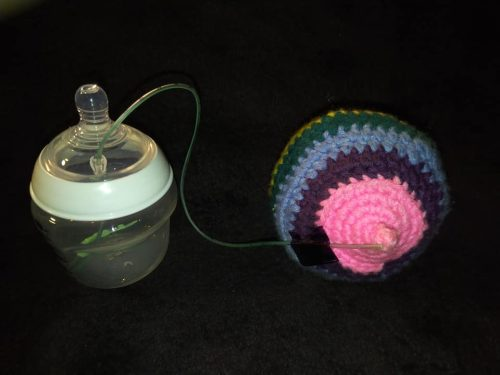
As you can see from the image below, the feeding tube goes into the vent. I find it easiest to go from the inside, squeeze the vent open, insert the tube, pull it through to the outside, then pull it back so the valve is flat. If you’re using a tube with a feeding port, ensure that the port is open. The weight of it should help it stay at the bottom of your container.
The reason I recommend using a vented bottle is because the straw goes in much easier through the vent. If you are going through the teat, the hole may split and become ragged, which can be a breeding ground for bacteria.
You may wish to set it up, then sterilise it before use.
The bottle needs to be above the nipple and gravity will assist with the flow. You do not need to tip the bottle. If the flow seems a little fast, you can pinch the tube to slow it down.
Using a Milk Storage Bag
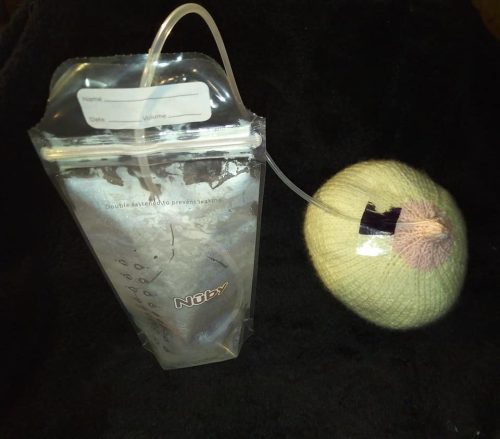
One of the benefits of using a milk storage bag is that it’s pretty much ready to go. You just need to get your ‘straw’ in place and seal it up. Most milk storage bags have a zip lock function that may help to keep the ‘straw’ in place. The main pitfall of using a milk storage bag is it’s not solid and could easily spill.
If you want something relatively compact, a milk storage bag can be a convenient option. However, because the bag is flexible, you may need to think more carefully about where you place it during a feed and how you keep it secure.
Using a Syringe
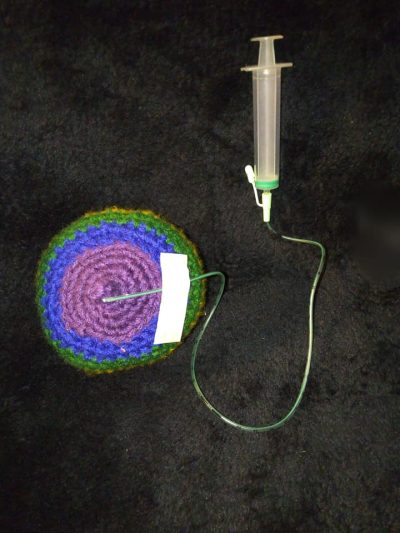
A syringe is best used for smaller feeds owing to the capacity of the device. Hospitals might be willing to give you a number of syringes for harvesting milk/colostrum. These can be frozen or refrigerated and then simply clipped into the feeding tube when needed. It is recommended that you remove the plunger from the syringe and let gravity do its thing. Alternatively, you can gently depress the plunger as your baby is feeding.
Because syringes hold relatively small amounts, this setup may not be practical for every feed. However, it can provide another option when only a small quantity of additional milk is needed.
Wearing Your SNS Device
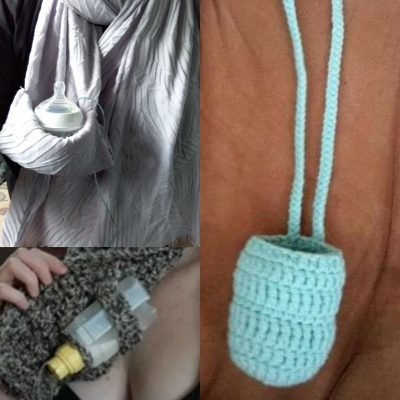
If you need to “wear” your SNS device, you can take an old scarf, fold up one end to the size of your container and sew the edges. I have also seen crocheted caddies with a string that goes around your neck!
Being able to wear the container can free up your hands and may make the system easier to manage while you are positioning and feeding your baby. You don’t necessarily need anything fancy – if you are making your own SNS, you may be able to adapt something you already have.
What If an SNS Doesn’t Work for You?
There are other feeding devices available if an SNS doesn’t work for you. Please reach out to us for more information.
Feeding does not have to look a particular way for it to be right for your family. An SNS is simply one of the options available, and you may use it alongside other feeding methods or decide that another approach works better for you and your baby.
Leave a Reply